
Setting the Stage
The International 2025 returned Dota 2’s crown jewel to Germany, this time at Hamburg’s Barclays Arena. Across a packed schedule that funneled into four arena days from September 11–14, sixteen teams fought through a demanding format and a shifting meta for a share of a prize pool that climbed to roughly $2.78 million. The atmosphere felt like classic TI: high stakes, heavy pressure, and the sense that no lead is ever really safe until the Ancient falls.
A New Group Stage, Old Truths
This year introduced a Swiss-style group stage at TI—a change that kept matchups fresh and storylines constantly in motion. Swiss formats reward consistency, but they also punish even brief dips in form. A slow start could snowball into elimination territory; a surge at the right moment could vault a team straight into the upper bracket. The result was exactly what viewers crave: meaningful games early and often, and very little dead time.
Despite the churn, a few familiar truths held. Teams that controlled the pace of the game—whether by squeezing the map with methodical macro or by trading efficiently around early power spikes—tended to rise. Draft flexibility mattered more than ever. Coaches and captains who could pivot between teamfight heaviness and pick-off lineups found ways to stay one step ahead across a long week.
Who Came In Hot—and Who Cooled Off
Several favorites arrived with convincing form from the summer circuit, but TI has a way of re-shuffling reputations. A handful of highly rated lineups looked mortal once the Swiss pairings stacked tough matches back-to-back. At the same time, dark-horse squads made noise with unorthodox drafts and crisp execution around Roshan timings. The conversation swung daily: one morning a team looked like a lock for top three; by evening they were scrapping to avoid elimination.
What separated the eventual finalists wasn’t perfect Dota—it rarely is at TI—but the ability to steady shaky games, salvage bad lanes, and reset between maps. In other words: resilience first, highlight plays second.
The Playoffs: Every Fight Counts
The playoff bracket delivered the tension everyone expected. Best-of-threes turned on single, nerve-shredding calls—an overstay after a won fight, a missed smoke timing, a misread on buybacks. You could feel teams calculating not just gold and cooldowns, but mental energy: when to trade the map, when to force, when to trust a scaling edge instead of chasing a flashy pick.
Through that pressure cooker, two contrasting styles rose to the surface for the grand final: Team Falcons with disciplined, patient teamfighting and controlled map play; Xtreme Gaming with tempo, skirmish pressure, and the confidence to snowball small wins into big ones.
The Grand Final: Five Games, One Aegis
The final went the distance—five games that swung on execution as much as drafts. Xtreme looked most dangerous when they accelerated lanes and dragged Falcons into awkward brawls before key items were online. Falcons, by contrast, were at their best when they stabilized early game turbulence, collapsed on vision, and forced decisive 5v5s around choke points they’d already prepped with wards and wave control.
Game 5 distilled the series. Xtreme pushed the tempo, but Falcons weathered the punches, traded space for time, and pounced when their cooldowns and buybacks finally aligned. It wasn’t flawless—TI finals rarely are—but it was composed. When the last teamfight broke Xtreme’s hold on the map, Falcons closed the door with the kind of clinical endgame that wins trophies.
The Champions: Team Falcons
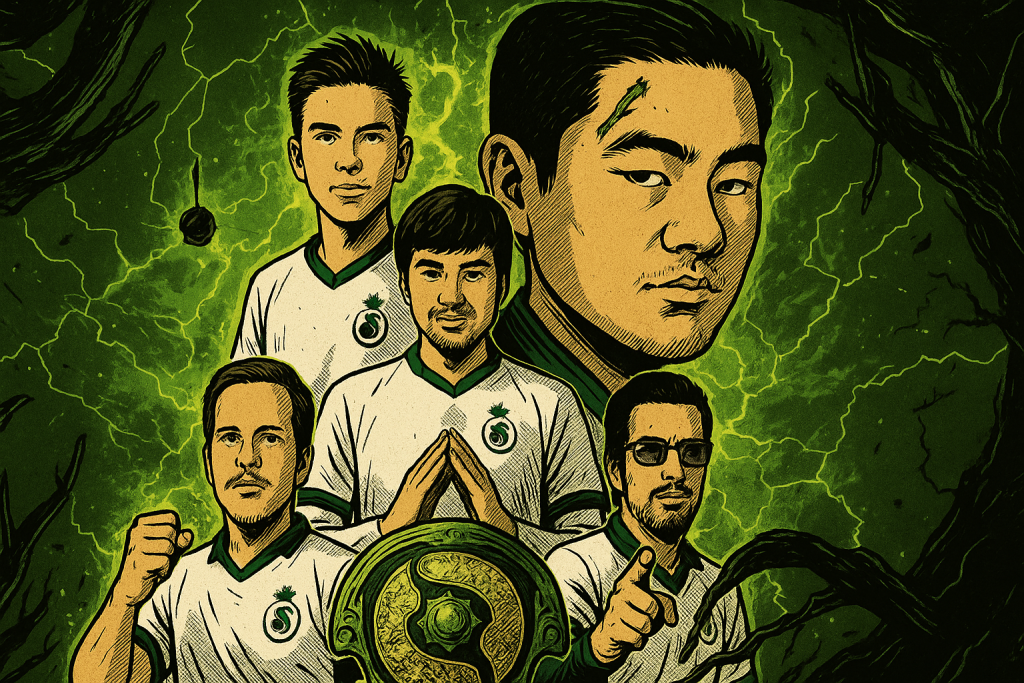
Team Falcons’ run ends with their first Aegis and a winner’s share a touch over $1.18 million. The roster—skiter, Malr1ne, ATF, Cr1t-, and Sneyking, with Aui_2000 behind them—balanced personality and playstyle in a way that clicked when it mattered most. Their identity this tournament wasn’t just about clean mechanics; it was about choosing the right fights, trusting farm distribution, and backing systems that hold up over a long event. When games turned messy, they kept their shape.
For Xtreme Gaming, the series was a reminder of just how thin the margins are at this level. They were one or two pivotal moments from flipping the outcome, and their approach throughout the event—confident lanes, proactive smoke timings, fearless objective trades—makes them a threat going forward.
Prize Pool and the Bigger Picture
While the prize pool isn’t approaching the astronomical heights of TI’s peak years, it still cleared the $2.7 million mark with a sizable chunk going to the champions. The funding model now relies on a base sum supplemented by a cut of team and talent bundle sales, a structure that seems more stable even if it’s less headline-grabbing. From a competitive perspective, the smaller pool hasn’t dulled the intensity. If anything, it has pushed attention back onto the games themselves—on prep, on drafts, and on those hairline decisions that separate third place from lifting the Aegis.
Viewership and Momentum
Audience numbers told a healthy story. The grand final peaked at around 1.77 million concurrent viewers, ranking TI25 among the most-watched Internationals to date. That’s a strong signal that when the narrative is tight and the games are close, Dota still commands a global audience. Regional broadcasts also posted meaningful growth, helped by charismatic community talent and the inherent drama of the Swiss stage feeding into the bracket.
What the Meta Said
If there was a single, neat headline for the meta, it would be this: flexibility wins. Offlaners who could toggle between aura utility and fight-starting bruisers brought balance to drafts. Mid players who threatened both tempo and scaling kept opponents guessing in bans and second-phase picks. And support duos that blended map control with save potential let teams stretch leads without overexposing cores. The real MVP, as always, was information—vision wars and smoke timing reads decided as many games as any late-game crit.
Legacy and What Comes Next
TI25 will be remembered for the Falcons’ composure, Xtreme’s ferocity, and a format that produced meaningful games from the opening day. It also reinforced where elite Dota is headed: toward teams that can switch identities at draft, trust structure under pressure, and land the final blow in 50-minute games where every buyback is a chess piece.
As the scene resets for the next cycle, the bar is clear. If you want to dethrone Falcons, you’ll need the same blend of discipline and daring—plus the mental stamina to survive a week where every best-of feels like a mini-final. The Aegis changes hands every year; the recipe to claim it doesn’t change much at all.

