From a StarCraft Idea to a New Genre
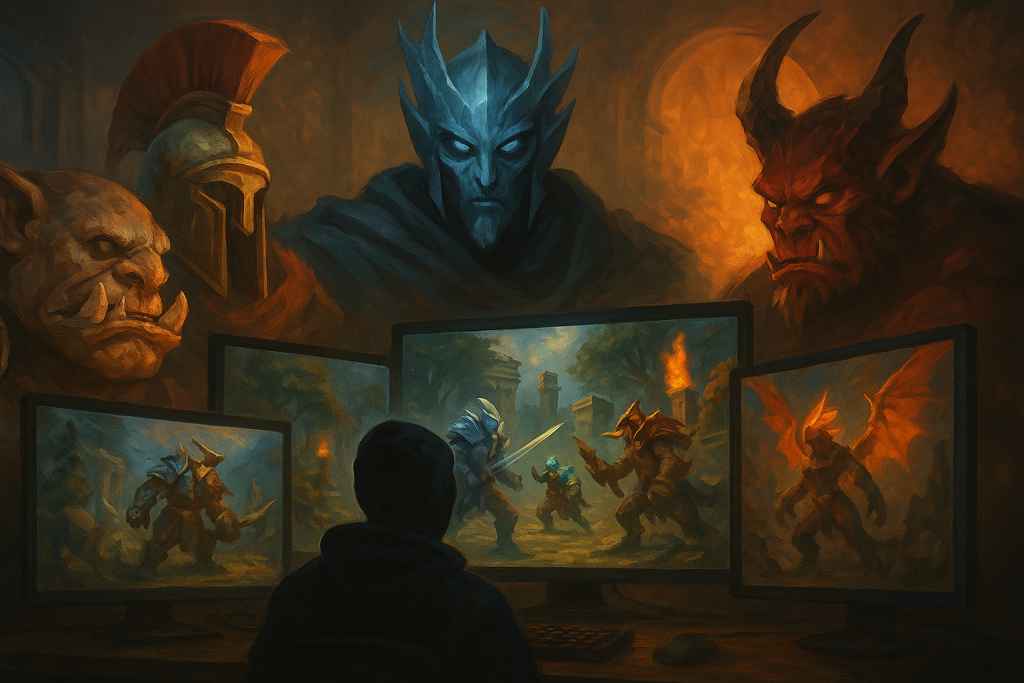
Every gaming revolution begins with a small experiment. Dota’s story doesn’t start in a studio but in a modding community. It began with a custom map called Aeon of Strife for StarCraft, where players controlled a single hero instead of an entire army.
When Warcraft III launched in 2002 with its advanced World Editor and hero system, the concept evolved. In 2003, a modder known as Eul created the first version of Defense of the Ancients (DotA) — two teams, two bases, waves of AI-controlled creeps, and one hero per player.
It was simple, yet endlessly replayable. Nobody knew it yet, but this experiment would define a new genre — the MOBA, or Multiplayer Online Battle Arena.
Eul: The Spark That Started It All
Eul (believed to be Kyle Sommer) built the foundation. His version was rough but innovative — it turned Warcraft III into a competitive, hero-based experience. Most importantly, Eul released his source code publicly, allowing others to improve and expand it.
When the Frozen Throne expansion came out, Eul moved on to other projects. But the openness of his map code allowed dozens of modders to create their own versions. Soon, there wasn’t just one DotA — there were many. That decision to share his work freely was the spark that kept the fire alive.
The Birth of DotA Allstars
By 2004, the modding scene had exploded. Different creators released competing versions — DotA Darkness Falls, DotA Chaos, DotA EX, and many others. Two modders, Meian and Ragn0r, decided to combine the best heroes and mechanics from all these maps into a single, definitive edition called DotA Allstars.
Allstars became the backbone of competitive play. It was more balanced, featured a broader hero pool, and gained a devoted player base on Battle.net. But it wasn’t until a new name entered the picture that DotA really became a phenomenon.
Guinsoo and the Rise of Structure
That name was Steve “Guinsoo” Feak. When he took over DotA Allstars, he turned it from a chaotic mod into a game with rhythm and rules. Guinsoo added recipe-based items, refined the leveling system, and introduced Roshan, the first true neutral boss that could turn the tide of a match.
He also helped define the modern DotA “meta”: the timing, the team roles, and the sense of progression that makes every match feel like a small strategy epic. Guinsoo’s vision was clear — DotA wasn’t just a custom map anymore; it was a competitive experience.
From Guinsoo to Neichus and IceFrog
By 2005, Guinsoo’s interest had started to fade, and another modder, Neichus, stepped in. He focused on improving balance and terrain design but needed help with coding. That’s when he teamed up with IceFrog, a meticulous and technical designer.
After a few versions, Neichus left the project, leaving IceFrog as the lead developer. This was the beginning of the modern era of DotA. IceFrog was obsessed with precision. His updates were frequent but subtle — tweaking numbers, adjusting hero balance, and responding constantly to community feedback.
Under IceFrog, DotA Allstars evolved into a polished, tournament-ready game with incredible depth. It stopped being “just a mod” and became a global esport.
IceFrog: The Invisible Architect
Few developers in gaming history have had the kind of mystique that surrounds IceFrog. Quiet, private, and almost never seen in public, he communicated mostly through patch notes and changelogs. But behind that anonymity was a level of commitment rarely seen in gaming.
He balanced the game for years, refining its complexity without breaking its soul. IceFrog understood something few others did — that a truly competitive game isn’t about flashy updates but about tiny adjustments that keep mastery possible but never complete.
By the late 2000s, DotA had professional tournaments, fan sites, and a growing audience across Asia, Europe, and North America. The mod had become a movement. Then came the next turning point.
Valve and the Birth of Dota 2
In 2009, Valve reached out to IceFrog and hired him to lead the development of a standalone sequel. The announcement of Dota 2 in 2010 marked the official recognition of what had begun as a fan project.
Valve’s version preserved the gameplay and heroes but added stability, matchmaking, and graphical fidelity. Most importantly, it gave DotA a legal and technical foundation. The transition wasn’t without conflict — Blizzard and Valve both claimed rights to the name “Dota” — but in 2012, they reached an agreement: Valve would retain commercial rights, while Blizzard could still use “DOTA” for non-commercial community maps.
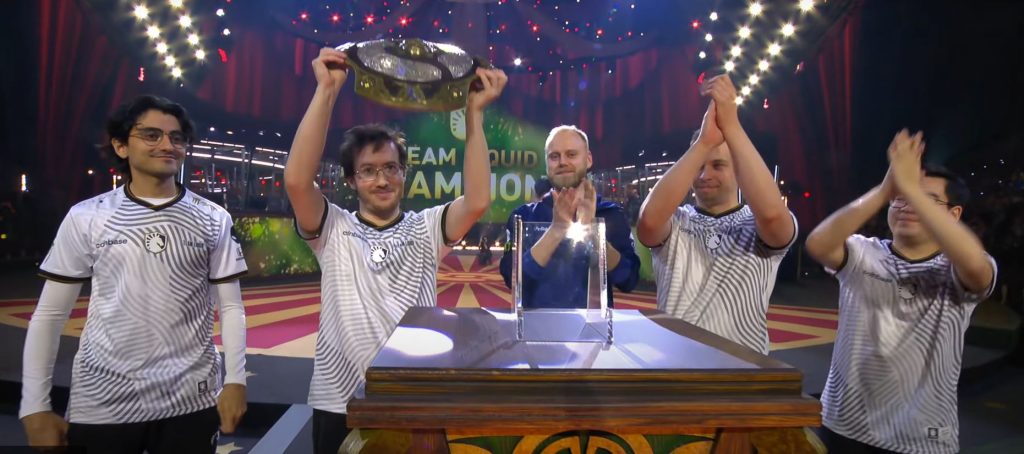
That same year, Valve launched The International, a tournament with an unprecedented $1.6 million prize pool. Overnight, DotA went from community mod to professional esport — and the MOBA genre became the new face of competitive gaming.
The Community That Held It Together
No story about Dota’s origins is complete without its community. Before Steam, before esports, there was TDA — the Tournament DotA Alliance — a group of players who organized matches, enforced rules, and helped maintain fairness.
Equally important was dota-allstars.com, a hub created by Steve “Pendragon” Mescon, where players discussed balance, wrote guides, and shared strategies. It was the beating heart of the early DotA world. When Pendragon later joined Riot Games to help develop League of Legends, it symbolized how far DotA’s influence had spread.
Who Really Made Dota?
If you’re looking for one creator, there isn’t one. Dota was shaped by many hands:
- Eul built the foundation.
- Meian and Ragn0r unified it under Allstars.
- Guinsoo gave it structure and identity.
- Neichus contributed design direction.
- IceFrog perfected and preserved it.
- And countless players tested, suggested, and refined it.
Dota’s creation wasn’t a single act of genius — it was a decade-long collaboration between passionate modders and an equally passionate community.
A Mod That Spawned a Genre
The genius of Dota lies in its design: simple goals, infinite depth. Five players per side, three lanes, towers, creeps, heroes, and a single objective — destroy the enemy’s Ancient. Yet within those boundaries lives an endless universe of strategy.
Every hero is strong and flawed in specific ways. Every victory requires coordination, not luck. That tension — between individual skill and team strategy — became the formula for a new genre.
When Riot Games released League of Legends in 2009 (co-created by Guinsoo and Pendragon), and Valve launched Dota 2, the MOBA had officially taken over. Games like Heroes of Newerth and Smite followed, each tracing their roots back to that one Warcraft III map.
Why Dota Endured
Most mods fade in a year. Dota survived because of three key things:
- It was open, allowing anyone to modify or improve it.
- It was balanced, rewarding skill, timing, and teamwork.
- And it was supported by a loyal community that treated every patch like an event.
The game demanded learning and rewarded mastery. No match was the same twice. That endless variety made it as compelling in its thousandth hour as in its first.
The Mystery and the Legacy
In a world where game developers are celebrities, IceFrog chose anonymity. Players never saw his face, yet they trusted his vision. His quiet leadership gave Dota consistency and discipline — traits that carried into Dota 2 and continue to shape its identity today.
Dota’s origins prove that great things can come from collaboration, not control. It’s a reminder that sometimes, the biggest revolutions in gaming don’t start with billion-dollar studios — they start with a handful of passionate players, experimenting late into the night.
Two decades later, the map that began as a hobby still defines what it means to master a game.
And that might be Dota’s greatest victory of all.